Saturday, November 26, 2011

The Deco Sound Poster


So a few months ago, I thought of making something to help spread the word about the blog. But it had to be something as cool as the vintage microphones I talk about. And it had to be a decorative item, that people would enjoy having. Not just an advertisement.

So I thought about making a poster. But I didn’t want just a bunch of mics all cluttering what would turn into a small sheet of paper. I wanted to do something special. If I had my way, sure, I would have singers like Aretha Franklin, Ryan Shaw, Phil Alvin (The Blasters), B.B. King, or Fred Parris (The Five Satins) all pose for me while singing with my microphones. Since this was virtually impossible, I had an idea that would still make the poster a special piece. Instead of having just anonymous models pose with the mics, I called upon friends who are real singers to take part in this project. Luckily for me, all four invitees accepted to participate. Three of them have their own CDs, so they’re not your regular family gathering singers.

The first singer, Letícia Maria Castro, sings in a group called Balaio de Maria. The group is composed of five great musicians, and play mainly pop (Brazilian or not), jazz, and R&B.


Rogério Midlej has been singing since 2000, and masters in Brazilian pop music. He participated in a Brazilian TV reality show called Fama, similar to American Idol. He also has a jazz quintet, with which he sings jazz standards.


Thais Uessugui is probably the singer with the most versatile background. I’ve seen her sing from disco to pop rock, from Bossa Nova to soul music. She was of great help, agreeing to give herself a "Billie Holiday" look.


My niece, Aline Perez, has appeared on the blog in an earlier post, but I’m pretty sure I’ll be talking about her again sometime in the future. She has a promising voice.

But this project wouldn’t have been possible without the help of a great friend. Vini Goulart, whom I met through my professional work in advertising, was kind enough to take the pictures in his studio (www.magnetofotografia.com.br). We had V.I.P. treatment the whole time from him and the rest of his staff.

So even if you’re hearing about these people for the first time, you now know that this project was special. Not only is the poster a great decorative piece, but it has a story behind it. Having said that, this poster has a limited edition of 150 copies. Since I’m not looking to make a profit, and the idea is to spread the word about the blog, I'm offering this poster for free. All I ask is that those who are interested in getting a copy, pay for the shipping costs. The poster is 64 x 94cm tall (approx. 25 x 37 inches), and printed on couché matte 250g paper. If you’re interested in a copy, please contact me directly at decosound@gmail.com.

Saturday, October 16, 2010

Doo Wop at 51

Ok, so if you enjoyed the clips from Doo Wop at 50, you’ll really want to buy the Doo Wop at 51 DVD. In terms of production, it’s a quantum leap from the previous year. T.J. Lubinsky and PBS learned a lot to do some really fine tuning in this 2000 production. But I’m pretty sure that most of it is a result of PBS having more financial resources to put into this show. The previous concert was such a success, that the viewers must have made some heavy contributions to their local stations.

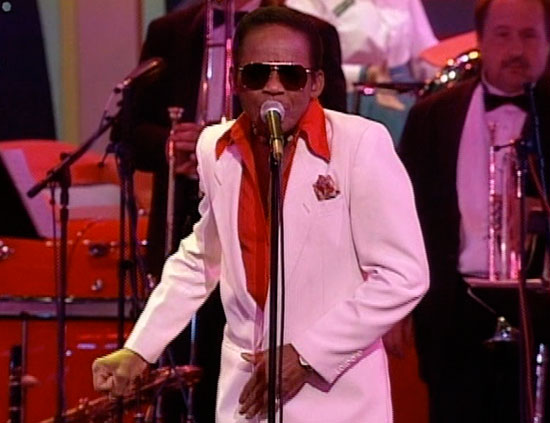
By far, this DVD is the best in the whole series. The stage layout and lighting were perfect, and the audio quality improved tenfold. Not only that, but Lubinsky continued to have success in getting many of the original artists to perform. It’s a shame to say that I didn’t know many of the groups until I bought these DVDs, but I’m glad to have seen them for the first time in such a grand way. Hank Ballard was one of the singers that I took notice of for the first time. His performance with the Midnighters was absolutely fantastic. I actually repeated his act two or three times before watching the rest of the concert.


Yes, I did think The Lion Sleeps Tonight was a song made for Disney’s The Lion King. At least, until I watched the DVD. Little did I know that The Tokens first recorded this song in the 60’s. It was also nice to see The Dubs sing Could This Be Magic, a song which I first heard on my Happy Days LP. 

The most memorable features that this DVD provides, though, are the historic encounters among the original singers of the 50’s and 60’s. You’ll see Bill Pinkey and Charlie Thomas, members of different eras of The Drifters, the four original Diamonds sing Little Darlin’ with Maurice Williams (who wrote the song) for the first time, the Teenagers sing Why Do Fools Fall In Love with Frankie Lymon’s brother, Louis, at the lead, and the best of all (in my opinion), members of the two formations of The Orioles singing the group’s biggest hit, Crying in the Chapel. This last one gives me goosebumps every time I watch it. Specially knowing that one of the formations dates as back as 1948.

Other groups featured on Doo Wop at 51 are: Jerry Butler, The Velvets, The Chiffons, The Coasters, The Crystals, Randy and The Rainbows, The Edsels, The Cadets/Jacks, Shirley Alston Reeves, The Dells, The Tymes, The Clovers, The Chiffons, The Excellents, Don and Juan, The Coasters, Mel Carter, Betty Everett, The Magnificents, The El Dorados, The Five Keys, and The Classics.

Monday, October 11, 2010

Doo Wop at 50

Ten years ago, I was randomly looking for DVDs online with search words like “rock and roll”, “soul”, and “R&B”. I always like to find CDs and DVDs that I’ve never heard about. It’s like online treasure hunting for the music fan. So, not finding anything interesting or new, I started searching for different music genres, such as “doo wop”. One of the results I got was a DVD called Doo Wop at 50. It was a 1999 concert produced by T.J. Lubinsky for PBS, to celebrate 50 years of Doo Wop music.

I was a bit skeptical, since I had seen a lot of DVDs featuring artists such as The Temptations, James Brown, B.B. King, but they simply weren’t very well made or the video wasn’t remastered in any way. But after looking at some of the groups that were on the DVD (The Penguins, The Platters, The Flamingos, etc.), I decided to give it a chance. When it arrived, I was extremely surprised as I started watching the concert. I did feel a bit disappointed when I first started noticing that most of the groups had new, young members. But after a while, it hit me. These groups have been singing for 40-50 years, so a lot of the original singers have passed away or simply don’t perform anymore. So I started realizing the historical importance of this concert in music history. Specially now, 10 years later, when a lot of the singers who were featured on the DVD have unfortunately passed away.


T.J. Lubinsky was inspired to create this first concert and the ones that were to follow from years of listening to his father’s records. He wanted to document an important style of music with its original performers before it was too late. Well, lucky for us, he took the initiative to create this series of shows in the time he did. The general rule was for each group to have at least one original member from the 50’s. Since this first concert was held in 1999, we get to enjoy a lot of the original lead vocalists singing their top hits.


Here’s the listing of the other groups that performed in this concert: The Del-Vikings, Jimmy Beaumont and the Skyliners, Gene Chandler, Johnny Maestro and the Brooklyn Bridge, Lee Andrews and the Hearts, The Cleftones, The Capris, The Marcels, Jive Five, The Legends of Doo Wop, Earl Lewis and the Channels, The Cadillacs, Golden Group Memories, The Chantels, The Moonglows, Jerry Butler, The Harptones, and The Spaniels.


Although most of the original singers were well into their 60’s, they did a very good job. You can easily identify a lot of the lead vocalists, even though some are hoarse or simply can’t hit that high note anymore. But even so, is it worthwhile buying it? Let’s just say that later on, I bought another copy, in case something happened to the first one.

Saturday, October 9, 2010

One hit wonders: The Regents


During the 50’s/60’s, it was pretty common for vocal groups to have a hit and not be able to duplicate the success with other songs. They would simply burn out, and this would make it difficult for record labels dedicate too much time to them, since there were so many groups available. The Regents would turn out to be one of the vocal groups that unfortunately had this fate.

The original Regents came together in the Bronx, in 1957.  The original members were Ernie Marseca, Chuck Fassert, Guy Villari, and Sal Cuomo. This lineup was first called The Monterays. A little bit later, they changed their name to The Desires, when they signed with Seville Records. They finally decided on The Regents, named after the cigarettes with the same name that Villari smoked, after adding Tony Gravagna and Don Jacobucci to the lineup. But life was tough for the group, as none of the songs they recorded were released. They had recorded Barbara Ann in only three takes, in 1958, but that didn’t guarantee them a recording contract. Eventually, they broke up.


It was not until 1961 that The Regents became known. As luck would have it, another group, called The Consorts, were in need of original songs for an audition. They ended up recording their own version of Barbara Ann. When the owner of Cousin Records heard the song, he decided to release the original version. The Regents reunited and the song was a #1 hit in New York, getting to #13 in the Billboard Hot 100. After this initial success, they recorded Run Around, which reached #28 on the pop chart. But after a royalties dispute with Roulette/Gee, who were responsible for worldwide distribution of Barbara Ann, the group broke up again.


In 1973, Guy Villari revived The Regents, although he was the only original member. Curiosly, Villari also wrote songs for other singers, like The Wanderer, recorded by Dion. Maybe if The Regents had recorded this song…


Thursday, October 7, 2010

Pause for music: Hank Ballard


Answer quickly, who sang the original version of The Twist? Chubby Checker. Easy, right? Wrong. Although Chubby Checker was certainly the one responsible for the song to be known all over the world, and making thousands learn how to Twist, Hank Ballard was the one who wrote the song and was the first to record it. That was in 1959, one year before Chubby came out with his version. Hank Ballard never got to be a chart topper for a long time, but he wrote and sang other Rock n’ Roll tunes like The Hoochi Coochi Coo, Finger Poppin’ Time, Let’s Go, Let’s Go, Let’s Go, and Work With Me Annie. One year after this last single came out, Etta James recorded The Wallflower (Dance With Me Henry). Etta James and Hank Ballard wrote it, so there’s no question here that the difference between the songs were simply lyrics.


Born John Henry Kendricks, Hank Ballard started singing in a church choir during the 40’s. Later, in 1951, he was invited to become a member of The Royals. The group, which at sometime had Jackie Wilson and future Four Tops Levi Stubbs as members, was now composed of Ballard, Henry Booth, Charles Sutton, Lawson Smith, and Sonny Woods. In 1952 they signed with Federal Records and but it wasn’t until two years later that they had their first hit, Work With Me Annie. They also changed their name to The Midnighters, so as not to get them confused with another group, The Five Royales. Soon after that, they recorded another chart topper, Annie Had a Baby, an answer song to Work With Me Annie. They went on to record other hits, like The Twist, which caught the attention of Chubby Checker through American Bandstand’s Dick Clark. The streak ended in the early 60’s, and eventually The Midnighters broke up.
 
Hank Ballard went on to a solo career, and even had James Brown produce several singles for him during the 60’s and 70’s. In the 80’s, Ballard decided to form The Midnighters again. He started out with only female singers, but later changed to an all male group. In 1990, he was inducted as a solo singer to the Rock and Roll Hall of Fame, for his innovative approach to R&B music. He continued to tour for two more decades until 2003, when he passed away due to complications from throat cancer.
 
In the video bellow, you’ll enjoy Hank Ballard and the Midnighters in the 2000 PBS special Doo Wop at 51. It’s part of a fantastic series of shows produced by PBS, which are available on DVD. I will get to that on a later post, as they’re really worth having.